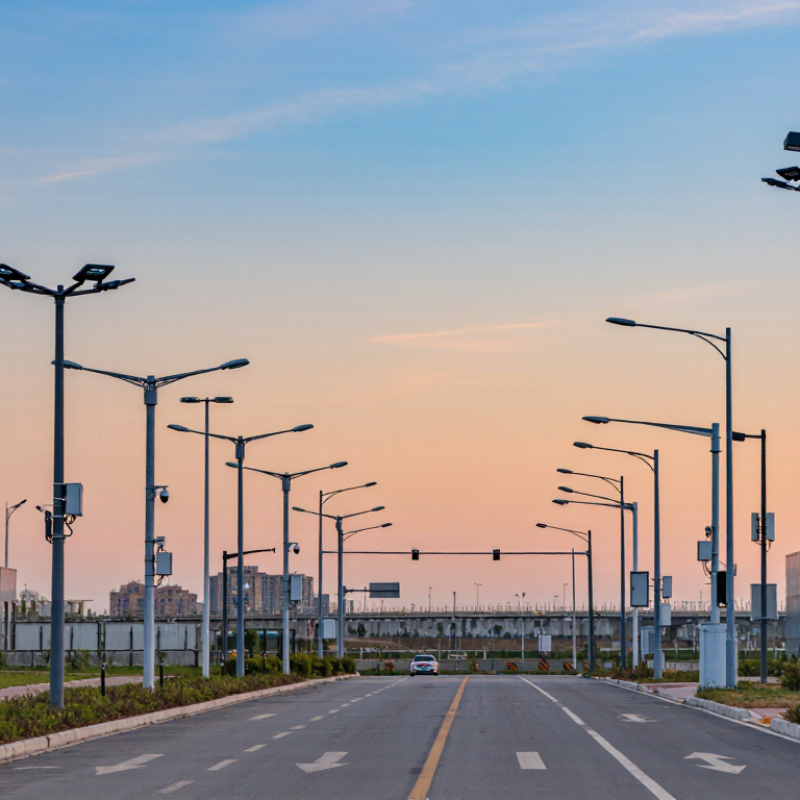
Global infrastructure is changing quickly, and the Light Pole now carries more than a luminaire. It supports cameras, sensors, wireless equipment, and connected-city systems. Grand View Research valued the global outdoor lighting market at approximately USD 15.4 billion in 2023. Its 2024 analysis also forecasts strong growth through 2030. Street-lighting demand remains closely linked to urban development, energy efficiency, and public safety.
The opportunity is substantial. The risks are practical.
A pole may look impressive in a catalog. However, corrosion, wind loading, foundation design, coating thickness, and delivery reliability determine its real value. The U.S. Department of Energy’s solid-state lighting reports continue to emphasize LED efficiency, controls, and long service life. These factors directly affect Light Pole selection, especially for highways, ports, campuses, and municipal streets.
John Barentine, an astronomer and recognized dark-sky lighting expert, has stated, “The right light, in the right place, at the right time.” His principle also applies to pole selection. Height, spacing, glare control, and maintenance access must work together. A stronger pole is not automatically a better solution.
This guide reviews 10 leading Light Pole manufacturers for global buyers. It considers engineering capability, material quality, customization, testing, certifications, export experience, warranty support, and after-sales service. Company information should be checked against current factory documents and project references. No ranking is perfect. Regional standards, soil conditions, weather exposure, and budget can change the final choice. Still, these manufacturers provide a useful starting point for careful procurement.
What Defines a Reliable Light Pole Manufacturer
A reliable light pole manufacturer begins with application-specific engineering, not a glossy catalog. Pole height, wind speed, soil condition, luminaire weight, and corrosion exposure must guide the design. Ask for structural calculations and clear material specifications. A competent supplier can explain wall thickness, base-plate dimensions, weld quality, and foundation requirements without hiding behind technical jargon.
Manufacturing controls reveal more than marketing claims. Look for traceable steel certificates, calibrated testing equipment, controlled galvanizing, and documented weld inspections. A small coating defect can become a rust line around the base after several rainy seasons. Reliable producers also check door openings, cable routes, anchor bolts, and assembly tolerances. These details affect installation time. They matter on site.
Field experience is equally important. Request project references with similar heights, climates, and loading conditions. Confirm whether the manufacturer supports drawings, packing checks, replacement parts, and installation questions after shipment. Delivery records should include realistic production times, protective packaging, and inspection photos. Promises can be too neat. No supplier forecasts every delay correctly, and honest communication is more valuable than perfect-looking schedules. Buyers should also review independent test reports and applicable safety requirements for the destination market. A manufacturer may offer attractive pricing while lacking local documentation or service capacity. That weakness often appears later, when a damaged pole needs answers quickly.
10 Best Light Pole Manufacturers for Global Buyers
Key Criteria for Comparing Global Light Pole Suppliers
Choosing a light pole supplier requires more than comparing catalog prices. Start with material quality, structural design, and production control. Ask whether the pole uses certified steel, consistent galvanizing, and suitable wall thickness. Request wind-load calculations for the actual installation location. Coastal projects may need stronger corrosion protection, while high-altitude sites require careful attention to temperature and transport conditions.
Review the supplier’s technical documents closely. These should include drawings, tolerances, welding procedures, coating specifications, and inspection records. A reliable manufacturer can provide material certificates and test results without delays. Check whether the lighting pole matches the fixture weight, cable entry design, foundation bolts, and maintenance access requirements. Small mismatches can create expensive site changes.
Production experience matters, but it should be measurable. Visit the factory when possible, or arrange an independent inspection before shipment. Examine welding seams, flange flatness, drainage holes, and packaging around vulnerable edges. Ask for recent project references in similar climates. A polished brochure proves little. I have seen suppliers promise short lead times, then overlook custom tooling and port congestion. That risk deserves written clarification. Warranty terms also need careful reading, especially for coating failure, replacement procedures, and excluded installation damage. Supplier communication is not a technical specification, yet it often reveals how problems will be handled.
These profiles focus on practical manufacturing strengths, not marketing claims.
One high-volume producer specializes in galvanized steel poles for highways and industrial parks. Its automated welding lines support consistent wall thickness.
Another focuses on aluminum poles, offering lighter handling and cleaner finishes for urban streets.
A third manufacturer builds tapered poles for wind-exposed sites. Its engineering team reviews load data before production.
A fourth supplies smart-ready poles with access panels, cable routes, and sensor mounts. Small details matter.
A fifth concentrates on solar lighting poles, combining battery compartments with reinforced foundations. Its performance depends heavily on local sunlight conditions.
A sixth manufacturer serves coastal projects with stronger corrosion protection and careful coating inspections.
A seventh produces decorative poles for parks, campuses, and pedestrian districts. Its designs look attractive, but replacement parts should be confirmed early.
An eighth supports large municipal orders with traceable steel records and factory inspection reports.
A ninth accepts smaller batches and custom dimensions, useful for contractors testing a new project. Lead times may be less predictable.
A tenth provides engineering support for unusual heights, brackets, and base plates. Buyers should request drawings, material certificates, wind-load calculations, and packing photographs.
Factory experience is valuable, yet mistakes still happen. One overlooked bolt pattern can delay installation for weeks. Comparing production evidence, testing procedures, warranty terms, and export experience gives global buyers a more reliable view of each manufacturer’s real capability.
Global buyers should evaluate light pole manufacturers through measurable standards, not attractive catalog images. Pole design must match local wind speed, terrain, luminaire weight, and foundation conditions. Common references include EN 40, applicable ASTM requirements, and regional structural codes. However, one standard rarely fits every market. Buyers should request load calculations, material certificates, welding procedures, and corrosion protection records.
Customization becomes valuable when projects involve coastal roads, stadiums, ports, or smart lighting systems. Manufacturers may provide tapered or octagonal steel poles, aluminum options, decorative arms, inspection doors, and customized base plates. Hot-dip galvanizing should be checked against recognized coating requirements, including coating thickness and surface continuity. Powder coating can add color and protection, but poor pretreatment may cause early peeling. Small details matter, such as anchor-bolt alignment and cable-entry dimensions.
Production capability is best judged through evidence. A reliable factory should show cutting, forming, welding, galvanizing, coating, assembly, and inspection processes. Ask for dimensional reports and sample test results. Factory acceptance testing can reveal defects before shipment. Traceable batch numbers also support future maintenance. No factory is perfect. A supplier that admits process limits may be more dependable than one promising everything. I would still inspect a physical sample, because drawings cannot reveal every uneven weld or fragile coating.
| Profile | Primary Product Focus | Typical Materials | Applicable Product Standards | Surface Protection | Customization Capability | Manufacturing Processes | Quality and Testing Scope | Best Fit for Global Buyers |
|---|---|---|---|---|---|---|---|---|
| Profile 01 | Roadway and highway lighting poles | Hot-rolled carbon steel; commonly grades equivalent to S235, S275, or S355 under EN 10025 | EN 40; EN 1090 where structural fabrication is covered; IEC 60598-1 for compatible luminaires | Hot-dip galvanizing to ISO 1461 or ASTM A123; optional polyester powder coating | Single or double outreach arms, flange or embedded bases, access doors, cable holes, and tenon dimensions | Tube forming, longitudinal welding, CNC plate cutting, robotic or manual welding, drilling, and galvanizing | Dimensional inspection, weld inspection, coating thickness measurement, and structural design verification | Municipal roads, highways, interchanges, and large outdoor infrastructure projects |
| Profile 02 | Urban street and pedestrian-area poles | Galvanized steel, aluminum alloys, or weather-resistant steel depending on design requirements | EN 40, IEC 60598-1, IEC 60598-2-3, and local electrical installation requirements | Zinc coating, powder coating, anodizing for aluminum, or multi-layer decorative systems | Decorative profiles, curved arms, heritage-style details, custom colors, banners, and maintenance doors | Extrusion or roll forming, CNC bending, welding, polishing, coating, and assembly | Appearance inspection, dimensional checks, coating adhesion testing, and corrosion-resistance evaluation | City centers, parks, promenades, campuses, residential streets, and public plazas |
| Profile 03 | High-mast lighting towers | High-strength structural steel with engineered base plates and segmented shafts | EN 40, EN 1993 structural calculations, IEC 60598 requirements for lighting equipment, and local wind codes | Hot-dip galvanizing to ISO 1461 or ASTM A123; duplex coating for severe environments | Multi-level platforms, raising-and-lowering systems, maintenance winches, aviation markers, and custom headframes | Heavy plate rolling, tapered-section welding, precision flange fabrication, lifting-system assembly, and site engineering | Wind-load calculations, weld testing, bolt verification, dimensional control, and raising-system functional testing | Ports, airports, logistics yards, sports facilities, industrial sites, and large parking areas |
| Profile 04 | Solar street-light poles and integrated solar systems | Galvanized steel or aluminum pole shafts with steel or aluminum solar-panel brackets | EN 40, IEC 60598-1, IEC 60598-2-3, IEC 62133 for applicable batteries, and IEC 61215 for photovoltaic modules | Hot-dip galvanizing, powder coating, and sealed electrical enclosures rated according to installation conditions | Panel tilt and azimuth, battery-box placement, controller compartments, foundation design, and smart-lighting interfaces | Pole forming, bracket welding, enclosure fabrication, photovoltaic mounting, wiring, and system commissioning | Battery protection checks, photovoltaic electrical testing, ingress protection review, wind-load calculation, and lighting autonomy testing | Off-grid roads, rural access routes, developing infrastructure, parks, and sites with limited grid availability |
| Profile 05 | Decorative and architectural lighting columns | Steel, cast aluminum, extruded aluminum, stainless steel, or engineered composite components | EN 40, IEC 60598-1, IEC 60598-2-3, and project-specific architectural specifications | Powder coating, liquid coating, anodizing, brushed stainless finish, or duplex corrosion protection | Ornamental bases, fluting, finials, custom silhouettes, integrated planters, banners, and concealed wiring | CNC machining, casting, spinning, metal forming, precision welding, polishing, and decorative finishing | Color consistency, surface-finish inspection, dimensional verification, corrosion testing, and sample approval | Hotels, resorts, commercial districts, waterfront developments, historic areas, and premium landscaping projects |
| Profile 06 | Industrial, warehouse, and logistics-area poles | Structural carbon steel with reinforced base plates and heavy-duty access components | EN 40, EN 1090 where applicable, ISO 1461, and local industrial electrical codes | Heavy hot-dip galvanizing; optional epoxy primer and polyurethane or powder topcoat | Higher luminaire loads, multiple outreach arms, camera brackets, cable trays, and reinforced inspection doors | Heavy-gauge plate processing, press braking, automated welding, machining, galvanizing, and load-rated assembly | Load calculations, weld visual inspection, coating thickness measurement, base-plate checks, and bolt-torque verification | Factories, distribution centers, container yards, mining sites, and industrial compounds |
| Profile 07 | Aluminum light poles for coastal and corrosion-sensitive locations | Structural aluminum alloys such as 6061 or 6063, selected according to design and extrusion requirements | EN 40, relevant aluminum structural design requirements, IEC 60598-1, and project wind standards | Anodizing, marine-grade powder coating, or compatible conversion and sealing treatments | Tapered extrusions, custom cross-sections, lightweight outreach arms, concealed cable routing, and special finishes | Extrusion, CNC cutting, bending, TIG or MIG welding, machining, anodizing, and powder coating | Alloy verification, dimensional inspection, weld examination, coating thickness checks, and salt-spray evaluation where specified | Coastal roads, marinas, resorts, pedestrian zones, and projects prioritizing low weight and corrosion resistance |
| Profile 08 | Smart-city and connected lighting poles | Galvanized steel or aluminum with modular equipment mounting zones | EN 40, IEC 60598-1, IEC 60598-2-3, IEC 62386 for DALI-based control systems where specified, and local ICT requirements | Hot-dip galvanizing, powder coating, or anodizing with sealed compartments and weather-resistant glands | Sensor ports, communication cabinets, CCTV brackets, public-address equipment, EV-related accessories, and modular nodes | Pole fabrication, modular bracket production, enclosure assembly, cable management, and electrical integration | Ingress protection review, electrical continuity, grounding, load calculations, interface checks, and network-device fit testing | Connected streets, traffic corridors, public Wi-Fi zones, surveillance networks, and urban technology projects |
| Profile 09 | Sports-field and area-lighting masts | High-strength steel shafts, service platforms, and engineered luminaire brackets | EN 40, applicable structural Eurocodes or local wind codes, IEC 60598-1, and sports-lighting project specifications | Hot-dip galvanizing, duplex coating systems, or high-durability paint systems for aggressive environments | Multiple floodlight arrays, aiming platforms, maintenance ladders, cable trays, anti-climb features, and access systems | Tapered shaft fabrication, heavy welding, platform assembly, ladder installation, galvanizing, and site erection support | Wind and vibration assessment, structural calculations, weld inspection, access-system testing, and aiming-platform verification | Stadiums, training grounds, tennis facilities, sports complexes, and large recreational areas |
| Profile 10 | Export-oriented project and private-label pole production | Carbon steel, aluminum, stainless steel, and mixed-material assemblies selected from approved project specifications | EN 40, ASTM A123 or ISO 1461 for galvanizing, ISO 9001 quality systems, and destination-market requirements | Hot-dip galvanizing, powder coating, liquid paint, anodizing, or duplex systems with documented inspection records | Buyer drawings, packaging marks, multilingual manuals, private-label documentation, special cartons, and container-loading plans | Flexible fabrication using CNC cutting, bending, welding, machining, coating, assembly, and export packing lines | Pre-production samples, first-article inspection, material certificates, coating reports, dimensional reports, and third-party inspection coordination | Distributors, engineering contractors, public tenders, OEM programs, and multi-country procurement projects |

| Buyer verification note: Final compliance depends on the project location, wind zone, foundation design, luminaire weight, corrosion category, electrical system, and applicable national regulations. Request current drawings, material certificates, structural calculations, coating reports, and inspection records before approval. | ||||||||
Selecting a light pole manufacturer requires more than comparing unit prices. Global buyers should examine evidence behind photometric, structural, and electrical claims. The International Energy Agency reports that lighting uses about 15% of global electricity. That makes efficiency a procurement issue, not merely a design preference. Ask for LM-80 and TM-21 evidence for LED performance, plus independent test reports for surge protection and thermal management. Request an IES-format photometric file and model the actual road width, mounting height, and pole spacing. A bright showroom sample proves little. Street conditions are different.
Manufacturer capability should be tested through documentation and repeatability. Check ISO 9001 procedures, welding inspection records, galvanizing thickness, coating adhesion, and IEC 60529 ingress ratings. For coastal projects, require corrosion testing and define the exposure category instead of accepting “marine grade.” The U.S. Department of Energy has documented roughly 50–70% energy savings in LED street-lighting conversions, but results depend on controls, dimming schedules, and existing fixtures. Ask for a measured baseline. A low quote can still be expensive. Review spare-parts access, warranty exclusions, delivery history, and factory acceptance tests. One weakness is easy to miss: some suppliers produce excellent prototypes but inconsistent batches. Require samples from production, not only polished showroom units.
The chart presents a practical 100-point screening framework for comparing light pole manufacturers without relying on brand popularity. Buyers should verify structural calculations, corrosion protection, quality systems, delivery capability, and compliance with applicable requirements such as EN 40, IEC 60529, IEC 62262, and local wind-load regulations.