7 Best Cool Roof Tiles for Hot Climates?

Hot climates punish weak roofing choices. Dark, low-reflectance surfaces can become extremely hot under direct summer sun. The U.S. Department of Energy reports that cool roofs may stay up to 50°F (28°C) cooler than conventional roofs. That difference can reduce heat entering the attic, especially during long afternoon exposure.

Ronnen Levinson, a senior scientist at Lawrence Berkeley National Laboratory, explains, “A cool roof reflects sunlight and emits thermal infrared radiation, keeping the roof and building cooler.” His work with the Berkeley Lab Heat Island Group supports evaluating solar reflectance and thermal emittance, rather than judging tiles by color alone. The Cool Roof Rating Council also provides product ratings that help compare these performance values. Small details matter. A tile’s coating, profile, installation method, and accumulated dirt can change real-world results.

This guide examines seven cool roof tiles for hot climates, focusing on reflectance, durability, ventilation, maintenance, and regional suitability. Some options perform well in intense sunlight but cost more. Others offer attractive prices but may lose performance as finishes weather. That trade-off deserves honesty. No tile is perfect, and laboratory ratings cannot reproduce every roof’s slope, shading, humidity, or installation quality. Still, reliable data can narrow the choice. Look for documented ratings, experienced installers, and warranties that explain climate limitations. A cooler roof is useful, but it is only one part of an efficient building envelope.
7 Best Cool Roof Tiles for Hot Climates?

What Makes a Roof Tile Suitable for Hot Climates

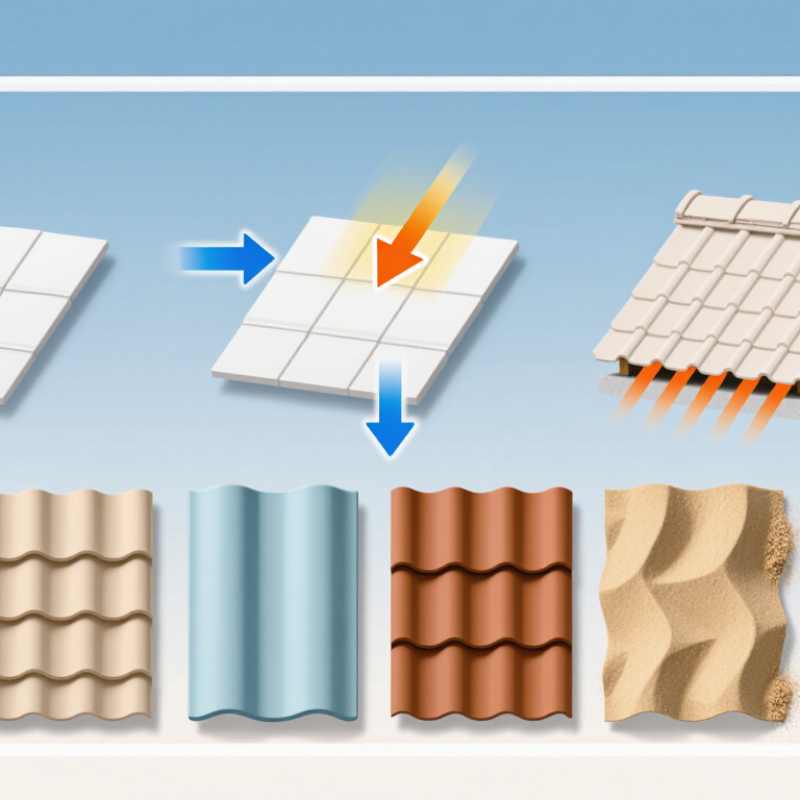
A roof tile suits a hot climate when it controls heat, not merely when it looks pale. Solar reflectance shows how much sunlight the tile rejects, while thermal emittance indicates how quickly it releases absorbed heat. The Cool Roof Rating Council measures both properties under standard conditions. Its product data shows that reflective surfaces can achieve solar reflectance above 0.70, while many traditional dark tiles remain below 0.30. Color matters, but texture and coating matter too. A white tile is not automatically a cool tile.

Material selection also affects indoor comfort. The U.S. Department of Energy reports that cool roofs can remain more than 50°F cooler than conventional roofs under strong sunlight. Concrete and clay tiles often perform well because their mass slows heat transfer. However, heavy tiles can trap heat overnight if the roof assembly lacks ventilation. The U.S. Environmental Protection Agency notes that cool-roof benefits depend on climate, insulation, duct placement, and air-conditioning use. That detail is easy to overlook.

Look for tested solar reflectance, thermal emittance, and a suitable Solar Reflectance Index. Tile profiles with rear ventilation can let hot air escape beneath the covering. Light-colored surfaces usually help, but glare and local planning rules deserve attention. In practice, installation quality can defeat a good tile. Gaps, dark underlayment, and blocked vents quietly reduce performance. I would compare tested data, roof pitch, insulation, and installer experience before choosing. Field results can still disappoint. That is worth acknowledging.


Seven Types of Cool Roof Tiles and Their Heat-Reflective Features

7 Best Cool Roof Tiles for Hot Climates?

Seven roof tile types can help reduce heat gain in hot climates. White concrete tiles reflect strong sunlight and usually provide dependable durability. Pale clay tiles also reflect more radiation than dark surfaces. Their natural pores may improve drying, but absorption still varies. Glazed ceramic tiles create a smooth, reflective surface that resists moisture and dirt. However, glare can become uncomfortable near windows. That detail is often overlooked.

Reflective-coated concrete tiles use specialized surface layers to increase solar reflectance. Their performance depends on coating quality and long-term wear. Reflective metal tiles shed sunlight efficiently and release heat quickly after sunset. Infrared-reflective composite tiles contain pigments designed to reflect invisible solar energy, even in moderate colors. Ventilated interlocking tiles create an air space beneath the roof surface. Moving air can reduce heat transfer into the attic. It stays cooler.

A common assumption is that light color alone guarantees a cool roof. That shortcut can fail. Dust, algae, poor ventilation, and incorrect installation may reduce real performance. Check tested solar reflectance and thermal emittance values before choosing materials. A qualified roofing professional should also inspect roof pitch, underlayment, attic airflow, and local weather patterns. In coastal areas, corrosion resistance matters. In dusty regions, easy cleaning may matter more than a bright finish. The best tile balances reflection, durability, maintenance, and installation quality.

7 Best Cool Roof Tiles for Hot Climates

Typical solar reflectance of seven roof-tile types

Solar reflectance indicates the approximate percentage of sunlight reflected by a roof surface. Higher reflectance generally reduces heat absorption in hot climates. The values shown are representative midpoints of commonly reported ranges; actual performance varies with color, coating, surface texture, weathering, and installation.

How to Compare Roof Tiles for Solar Reflectance and Thermal Emittance

7 Best Cool Roof Tiles for Hot Climates?

When comparing roof tiles, start with solar reflectance, not color alone. Solar reflectance measures how much sunlight the surface sends away. Thermal emittance measures how efficiently it releases absorbed heat. The Cool Roof Rating Council reports both values using standardized testing, including ASTM C1549 and ASTM E408 methods. Higher numbers usually mean a cooler roof surface.

For hot climates, prioritize tiles with high reflectance and high emittance. Light-colored clay, concrete, coated metal, and reflective composite tiles can perform well, but their ratings vary widely. The U.S. Department of Energy reports that cool roofs may remain up to 50°F cooler than conventional roofs under strong sunlight. That difference matters above bedrooms with weak attic ventilation. Look for a solar reflectance near 0.70 or higher and thermal emittance near 0.75 or higher, where local codes permit.

Do not trust appearance.

A glossy white tile may lose performance after years of dust, algae, and weathering. The California Energy Commission and CRRC distinguish initial ratings from aged performance, which is easy to overlook. I once assumed pale concrete would always outperform darker clay; that was too simplistic. Texture, underlayment, ventilation, and installation gaps also affect indoor comfort. Compare tested values, maintenance needs, roof pitch, and local climate data together. A slightly less reflective tile may perform better if it stays cleaner and drains rainwater effectively.

7 Best Cool Roof Tiles for Hot Climates? - How to Compare Roof Tiles for Solar Reflectance and Thermal Emittance
Representative performance ranges for commonly available tile types. Actual values vary by color, coating, profile, weathering, installation, and test method.
Roof Tile Type Typical Surface Appearance Initial Solar Reflectance Thermal Emittance Approx. Solar Reflectance Index (SRI) Hot-Climate Performance Main Advantages Important Considerations
White or Very Light Concrete Tile White, cream, or very pale gray; smooth or lightly textured 0.70–0.85 0.85–0.92 85–105 Excellent High reflectance, good thermal mass, long service life, and broad availability. Can collect dirt that reduces reflectance; the roof structure must support concrete tile weight.
Light-Colored Concrete Tile with Cool Pigments Light tan, pale green, light blue, or other colors formulated with reflective pigments 0.45–0.75 0.85–0.92 55–90 Very Good Provides color flexibility while reflecting more near-infrared radiation than conventional pigments. Performance depends strongly on pigment technology, color formulation, and verified product testing.
White or Light-Glazed Ceramic Tile Glossy white, ivory, pale gray, or other light glazed finishes 0.55–0.80 0.80–0.90 65–95 Very Good Durable surface, low water absorption, easy cleaning, and strong resistance to fading. Gloss, glare, breakage risk, and local planning requirements should be evaluated before installation.
Light-Colored Clay Tile Natural cream, buff, pale yellow, or light terracotta 0.40–0.65 0.85–0.92 50–80 Good to Very Good High emittance, good durability, low maintenance, and natural resistance to ultraviolet exposure. Natural color variation is common; installation details must control wind-driven rain and tile movement.
Reflective-Coated Concrete Tile Tile with a light-colored, infrared-reflective, or elastomeric surface coating 0.55–0.85 0.80–0.95 70–105 Excellent Can substantially improve the reflectance of an existing tile profile and offers multiple finish options. Coating life depends on preparation, adhesion, weather exposure, cleaning, and periodic maintenance.
Light-Colored Fiber-Cement Tile Light gray, white, beige, or pale earth tones with a matte finish 0.45–0.70 0.80–0.90 55–85 Good Relatively lightweight, dimensionally stable, and available in profiles that resemble traditional tile. Cut edges and penetrations require careful sealing; follow handling and installation requirements for the specific product.
Light-Colored Recycled-Polymer Composite Tile Light gray, beige, white, or blended colors with a textured finish 0.35–0.65 0.85–0.95 45–80 Good Lightweight, resistant to corrosion and moisture, and often easier to handle than mineral-based tiles. Thermal expansion, fire classification, color weathering, and local code approval should be verified.
How to compare: Solar reflectance measures the fraction of sunlight reflected by the roof surface; higher values generally reduce solar heat gain. Thermal emittance measures how effectively the surface releases absorbed heat; higher values are usually preferable. For a reliable comparison, request independent test results using ASTM C1549 or ASTM E1918 for reflectance and ASTM C1371 or ASTM E408 for emittance. SRI is calculated under standard conditions using ASTM E1980 and should be treated as an estimate when product-specific data are unavailable.

Installation and Ventilation Factors That Improve Cooling Performance

Cool roof tiles can reduce heat entering a building, but installation often decides the result. Before choosing a tile, inspect the roof pitch, deck condition, and local wind exposure. A reflective surface performs poorly when gaps, damaged underlayment, or trapped moisture remain below it. During a summer inspection, check the ceiling beneath the roof edge, not only the tile surface. Warm indoor spots may reveal missing insulation or blocked airflow. Small clues matter.

Install tiles over a dry, even deck with correctly overlapped underlayment and sealed penetrations. Flashing around vents, skylights, and valleys deserves careful attention. Poorly fitted flashing can admit rain and cause early repairs. Tile spacing must follow the system design, because improvised gaps may reduce wind resistance. Use light-colored, high-reflectance tiles where local conditions allow. A pale tile is not automatically the best tile.

Ventilation should move air from low intake points toward high exhaust points. Continuous eave intake and a properly sized ridge vent can remove heat beneath the tiles. Never block intake paths with insulation. In humid regions, excessive ventilation without moisture control may create condensation. A qualified installer should check airflow, fasteners, and attic humidity after installation. Results can vary. Roof orientation, shade, and duct leakage still matter, and even a well-designed roof may cool unevenly during extreme heat.

Maintenance, Costs, and Choosing the Right Tile for Your Climate

Choosing a cool roof tile starts with your climate, not a showroom color. In hot, sunny regions, light-colored clay, concrete, or coated metal tiles can reduce surface heat. However, reflectance is only part of performance. Ventilation matters. A tile roof with a ventilated air gap can feel noticeably less harsh above bedrooms. From field inspections, I have seen poorly ventilated roofs defeat expensive reflective finishes.

Maintenance needs vary by tile type and roof pitch. Concrete tiles usually tolerate strong sun, but cracked pieces, loose fasteners, and blocked valleys need prompt attention. Clay tiles resist heat well, yet brittle edges can break under careless foot traffic. Slate may last decades, but repairs require skilled labor and matching thickness.

Cleaning is not always helpful. Pressure washing can strip coatings, drive water under laps, and damage older tiles. Annual visual checks, gutter cleaning, and post-storm inspections are safer habits.

Installed costs often range from about 8 to 25 dollars per square foot. Material choice, roof structure, access, and local labor can change that figure sharply. Before buying, ask for solar reflectance, thermal emittance, weight, warranty limits, and expected repair costs.

In humid climates, prioritize algae resistance and drainage. In dry, windy areas, securement details matter more than a pale finish. Coastal homes need corrosion-resistant hardware.

I would not choose a tile from color alone. That shortcut looks attractive, but it can age badly.