Top 10 Clay Tiles Suppliers for Global Buyers

Choosing reliable clay tiles suppliers requires more than comparing catalogue images or quoted prices. Global buyers must examine manufacturing experience, product consistency, export capacity, and after-sales support. A tile that looks warm and textured on a screen may arrive with uneven edges, color variation, or unexpected breakage. Details matter.

This guide introduces ten suppliers selected for their market experience, documented production capabilities, and suitability for international projects. The evaluation considers clay quality, firing methods, dimensional accuracy, water absorption, frost resistance, packaging, and certification practices. It also reviews whether suppliers can provide samples, technical sheets, factory photographs, and clear responses to quality concerns. These checks help buyers compare traditional handmade tiles with machine-produced options more fairly.

No supplier fits every project. A restoration contractor may value historic profiles, while a commercial developer may prioritize volume and stable lead times. Freight distance can change the real cost significantly. Minimum order quantities can also restrict smaller buyers. Rankings may shift as production standards, capacity, and customer feedback change. That limitation deserves attention. Buyers should confirm current information directly before signing contracts or approving large shipments. When possible, request a sample batch and inspect its surface, thickness, color, and packaging. Reliable sourcing is rarely dramatic. It depends on careful questions, visible evidence, and realistic expectations.
Top 10 Clay Tiles Suppliers for Global Buyers

What Clay Tiles Are and Why Global Buyers Choose Them

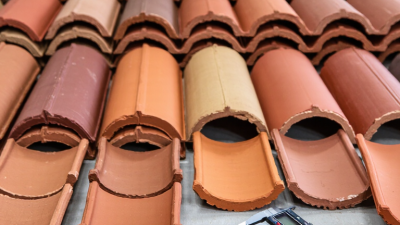
Clay tiles are roofing or facade units made from natural clay. Manufacturers shape, dry, and fire them at high temperatures. This process hardens the body and develops the tile’s final color. Some tiles remain unglazed, while others receive a protective surface. Their texture often shows slight variation. That variation creates a warm, handcrafted appearance.

Global buyers choose clay tiles for durability, visual character, and relatively low maintenance. Properly fired tiles resist sunlight, rain, and many temperature changes. They do not rust. Their thermal mass can reduce heat transfer through a roof when ventilation is designed correctly. Buyers often compare water absorption, breaking strength, frost resistance, dimensions, and test reports. These details matter more than a polished catalog image. A tile may look perfect and still perform poorly in the wrong climate.

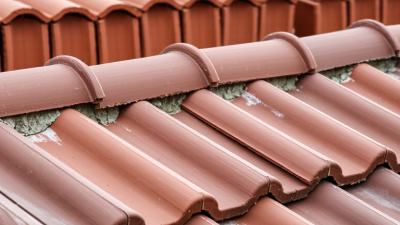
Clay tiles are heavy, so the roof structure needs professional assessment before purchase. Long-distance shipping also increases handling risks and replacement costs. I have seen projects lose time because accessory tiles were overlooked. Skilled installation is essential, especially around ridges, valleys, and roof edges. Color differences can also appear between production batches. That is not always a defect, but buyers should approve samples before ordering. Careful inspection remains necessary.

How the Top 10 Clay Tile Suppliers Were Selected

How the Top 10 Clay Tile Suppliers Were Selected

The Top 10 Clay Tiles Suppliers for Global Buyers were selected through measurable, buyer-focused criteria. Product quality received the highest weighting, followed by export experience, production capacity, compliance, and after-sales support. Each candidate was checked for technical datasheets, factory evidence, test reports, and stable shipment records. Marketing language alone was not accepted.

A 2024 Grand View Research report estimates the global roofing materials market at approximately US$136 billion in 2023. It also projects annual growth of about 4% through 2030. This wider market data supports the need for suppliers with scalable production and dependable logistics. UN Comtrade data under HS 6905 was also reviewed to compare reported export activity and destination coverage. Trade volume can reveal experience, but it cannot prove product consistency.

Technical screening included water absorption, dimensional tolerance, freeze-thaw resistance, and color stability. These points align with ISO 13006 and relevant regional roofing standards. Samples were considered more reliable when their surface texture remained consistent after handling. Packaging was also inspected, especially corner protection and pallet wrapping. Small weaknesses often become expensive damage at the destination port.

No ranking is perfectly universal. A supplier suitable for a Mediterranean project may fail in a freezing climate. Some records were incomplete, which required cautious scoring rather than generous assumptions. That limitation deserves attention. A lower export volume may reflect specialization, not poor performance.

Profiles of the Top 10 Clay Tile Suppliers

Top 10 Clay Tiles Suppliers for Global Buyers

Profiles of the Top 10 Clay Tile Suppliers

Global buyers need more than attractive samples. They need stable firing, documented testing, and dependable export capacity. Grand View Research estimated the global ceramic tiles market at over USD 350 billion in 2023. Clay tiles represent a smaller, design-led segment within this market. The leading ten supplier profiles include manufacturers from Spain, Italy, India, Turkey, China, Brazil, Vietnam, Mexico, Portugal, and Indonesia. Their strengths differ. Some focus on handmade terracotta, while others provide extruded roofing tiles or large architectural collections.

European suppliers often emphasize heritage methods and strict dimensional control. Indian and Turkish producers commonly offer strong value and broad color ranges. Chinese and Vietnamese factories may provide high-volume production and flexible packaging. Brazilian and Mexican suppliers can serve regional projects efficiently. Portuguese and Indonesian producers are often noted for textured surfaces and warmer earth tones. These descriptions are useful, but rankings are never perfect. A polished catalog can hide inconsistent batches, delayed containers, or weak after-sales support.

Tips: Request three production samples from different lots. Check water absorption, frost resistance, breaking strength, and shade variation through independent testing. The ISO 10545 ceramic tile standards provide a practical testing framework. Ask each supplier for kiln temperature records and recent inspection reports. Also confirm pallet strength, moisture protection, and replacement terms before payment. Small details matter. A beautiful tile may still fail outdoors.

Comparing Quality, Capacity, Certifications, and Product Range

Top 10 Clay Tiles Suppliers for Global Buyers

When screening ten clay tile suppliers, compare more than surface appearance. Quality begins with consistent firing, accurate dimensions, and controlled water absorption. During sample checks, inspect edges, corners, and the underside for cracks or uneven glazing. Ask for test data covering frost resistance, breaking strength, and water absorption. Small details matter. Color variation should remain within an agreed range across different production batches.

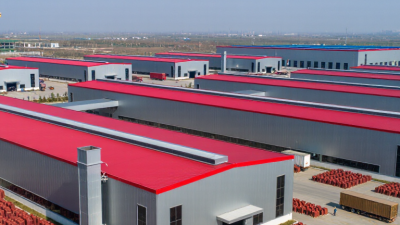
Capacity needs practical verification, not impressive figures alone. Review kiln size, monthly output, lead times, and the supplier’s ability to repeat custom profiles. Request recent production records and packaging specifications. Certifications can support trust, but each document needs careful checking. Confirm the issuing body, testing standard, validity period, and covered product series. A certificate for one tile may not apply to every model.

Product range also affects purchasing efficiency. Useful suppliers may offer flat tiles, interlocking designs, ridge pieces, trims, and matching accessories. However, a broad catalog does not always mean equal quality. Some profiles may receive less production attention. Buyers should compare samples from several categories, not only the most attractive option. Check pallet strength, labeling, and replacement procedures for damaged pieces. Factory visits, independent inspections, and clear technical drawings provide stronger evidence than polished photographs. Yet inspections can still miss seasonal color changes. That risk deserves discussion before large orders.

Top 10 Clay Tiles Suppliers for Global Buyers

Anonymized comparison of quality, production capacity, certifications, and product-range breadth.

The chart uses a normalized 0–100 benchmark index. Quality reflects reported technical performance such as water absorption, frost resistance, and dimensional consistency; capacity represents annual clay-tile output; certification coverage includes commonly requested quality, environmental, and product-compliance certifications; and product range measures available profiles, finishes, colors, and accessory systems.

How Global Buyers Can Evaluate and Purchase Clay Tiles

When comparing the top ten clay tile suppliers, buyers should begin with evidence, not catalogue photographs. The broader ceramic tile market reached roughly US$100 billion in 2023, according to IMARC Group’s 2024 market report. That figure signals competition, but it does not prove roofing-tile quality. Request test reports for water absorption, breaking strength, frost resistance, and dimensional tolerance. EN 1304 and ISO 13006 provide useful reference points. Ask whether results apply to the exact profile and firing batch. They often do not.

Order a small sample set before approving a container. Check shade variation beside daylight, not showroom LEDs. Measure thickness at several points. A 1 mm difference can complicate interlocking and increase site cutting. Request kiln records, batch codes, inspection photos, and a recent factory audit. The European Commission’s Ceramic Manufacturing BREF identifies kiln energy use and emissions as important production controls. Ask for energy or environmental data, rather than accepting vague green claims.

Freight planning needs equal attention. Confirm pallet dimensions, gross weight, breakage allowance, Incoterms, lead time, and replacement policy in writing. UN Comtrade data under HS 6905 can help compare exporting countries and shipment trends, but customs codes may combine different tile types. Treat the data carefully. The lowest quote is rarely the lowest installed cost. A supplier may pass a factory test yet fail on packaging or shade consistency. Leave room for that uncomfortable possibility.

Top 10 Clay Tiles Suppliers for Global Buyers - How Global Buyers Can Evaluate and Purchase Clay Tiles
Rank Anonymous Supplier Profile Primary Export Region Typical Product Types Common Tile Format Typical Water Absorption Frost-Resistance Evidence Applicable Standards Typical MOQ Indicative Lead Time Packaging Requirements Recommended Buyer Verification Evaluation Score
1 Supplier Profile 01 European Union Interlocking roof tiles Plain tiles Approx. 250–350 mm length; 150–300 mm width Usually below 10%; confirm the product test report Freeze-thaw test report required for cold climates EN 1304; local building regulations; CE marking where applicable Usually one mixed pallet or one container section Approximately 4–8 weeks after approved order Palletized, strapped, moisture-protected, edge-protected Check batch consistency, dimensional tolerances, color range, and breakage allowance 9.2/10
2 Supplier Profile 02 Southern Europe Mediterranean tiles Barrel tiles Common barrel lengths of approximately 400–500 mm Often 8–15%, depending on firing and surface treatment Request freeze-thaw classification or independent laboratory testing EN 1304; national roof-tile specifications One to three pallets for standard colors Approximately 5–10 weeks Strong export pallets with separators between curved tiles Confirm profile compatibility, installation overlap, and replacement-tile availability 9.0/10
3 Supplier Profile 03 East Asia Flat clay tiles Decorative roof tiles Approx. 300–400 mm length; project-specific sizes available Typically 6–12%; verify by lot-specific testing Required for regions exposed to repeated freezing and thawing ASTM C1167 for clay roof tiles where specified; EN 1304 for European projects Often 500–2,000 pieces depending on mold and color Approximately 6–12 weeks, including production approval Export-grade fumigated pallets where required, with corner protection Approve a pre-production sample and test color, warpage, and accessory fit 8.8/10
4 Supplier Profile 04 South Asia Hand-finished tiles Heritage-style tiles Commonly 250–350 mm length; handmade variation may occur Frequently 10–18%; request project-specific laboratory results Additional testing is essential for frost-prone markets ASTM C1167, EN 1304, or destination-market requirements Typically 300–1,000 pieces Approximately 6–14 weeks Individual separators, reinforced cartons, and moisture control Set acceptable limits for color variation, surface texture, size variation, and warpage 8.6/10
5 Supplier Profile 05 North America Standard roof tiles Custom-profile tiles Product-specific; common roof-tile lengths are approximately 300–450 mm Product-specific; confirm compliance with the applicable specification Cold-weather performance should be documented for northern regions ASTM C1167; local wind, fire, and roofing-code requirements Usually one pallet or a project-defined production run Approximately 4–10 weeks Heavy-duty pallets, protective wrapping, and labeled bundles Verify wind-uplift requirements, fire classification, fastening method, and roof pitch 8.5/10
6 Supplier Profile 06 Latin America S-shaped tiles Mission tiles Usually 350–500 mm length, depending on the profile Commonly 8–16%; verify the specified product series Frost testing may be limited; obtain independent evidence for cold markets Local standards; ASTM C1167 or EN 1304 when required by the project Approximately 500–2,000 pieces Approximately 6–12 weeks Stacked pallets with anti-shock separators and waterproof outer wrapping Review water absorption, dimensional fit, roof coverage, and spare-tile policy 8.3/10
7 Supplier Profile 07 Middle East and North Africa Low-pitch tiles Terracotta roof tiles Approx. 250–400 mm length; project-specific profiles available Often 6–14%; confirm results for the final fired batch Frost resistance should be independently verified for temperate climates EN 1304 or destination-market roofing standards Typically one to five pallets Approximately 5–10 weeks UV-resistant wrapping, reinforced pallets, and protection from impact Check solar-reflectance expectations, thermal movement, surface finish, and color stability 8.1/10
8 Supplier Profile 08 Eastern Europe Pressed clay tiles Weather-resistant tiles Approx. 300–450 mm length; interlocking formats are common Generally below 12%; confirm the declared technical value Freeze-thaw testing and frost classification are important selling points EN 1304; national performance declarations where applicable Usually one pallet for standard products Approximately 4–8 weeks Factory-stacked pallets with stretch film and edge protection Review product declaration, test laboratory accreditation, and roof-system accessories 8.0/10
9 Supplier Profile 09 Oceania High-wind roof tiles Salt-air resistant options Commonly 300–450 mm length; profile varies by wind zone Product-specific; obtain certified test data before purchase Wind and weather exposure testing should match the installation location AS 2049 and relevant local roofing standards where applicable Usually one project pallet or a full production batch Approximately 6–12 weeks Marine-export packaging, strong strapping, and corrosion-resistant handling materials Verify wind-zone rating, fixing requirements, salt exposure performance, and roof pitch 7.9/10
10 Supplier Profile 10 Multi-region contract manufacturer Private-label production Custom colors and molds Custom dimensions; tooling approval required before mass production Agreed in the purchase specification and confirmed by batch testing Must be demonstrated through destination-market testing Specified by the buyer; may include EN 1304, ASTM C1167, or local codes Often 1,000–10,000 pieces for custom production Approximately 8–16 weeks, including tooling Buyer-approved export packaging, pallet labeling, and container loading plan Use a written quality agreement covering samples, inspection, tolerances, claims, and replacement parts 7.7/10

The technical ranges above are industry benchmarking references rather than company-specific claims. Buyers should validate final values through current technical datasheets, accredited laboratory reports, samples, applicable building codes, Incoterms, and pre-shipment inspection.