
What Are the Top Types of House Roof Tiles?
Choosing among house roof tiles is more complicated than selecting the most attractive color. Clay, concrete, slate, and composite tiles each respond differently to weather, structure, maintenance, and installation quality. A heavy slate roof may endure for generations, while lightweight composite tiles can simplify structural demands. The right choice depends on the whole roof assembly.
Industry data shows why this decision deserves careful attention. Grand View Research valued the global roofing materials market at approximately $136.3 billion in 2023 and expects continued growth through 2030. Fortune Business Insights also identifies renovation, urban development, and climate resilience as important market drivers. These figures describe a broad roofing sector, not every tile category. That distinction matters.
“A roof is a system, not just a covering,” says Mark Graham, former vice president of technical services at the National Roofing Contractors Association. His observation should guide this comparison. Tile profile, roof pitch, underlayment, flashing, ventilation, and local wind requirements must work together. Otherwise, even premium tiles can fail prematurely.
No single tile wins every roof.
This guide examines the top types of house roof tiles through practical details, including weight, durability, fire resistance, appearance, cost, and repair needs. It also considers real installation concerns, such as cracked pieces near valleys or loose tiles after severe wind. Some comparisons remain imperfect because regional labor prices and building codes vary widely. That limitation is worth acknowledging. A beautiful tile may be unsuitable for an older structure, while a modest concrete option may deliver stronger long-term value.
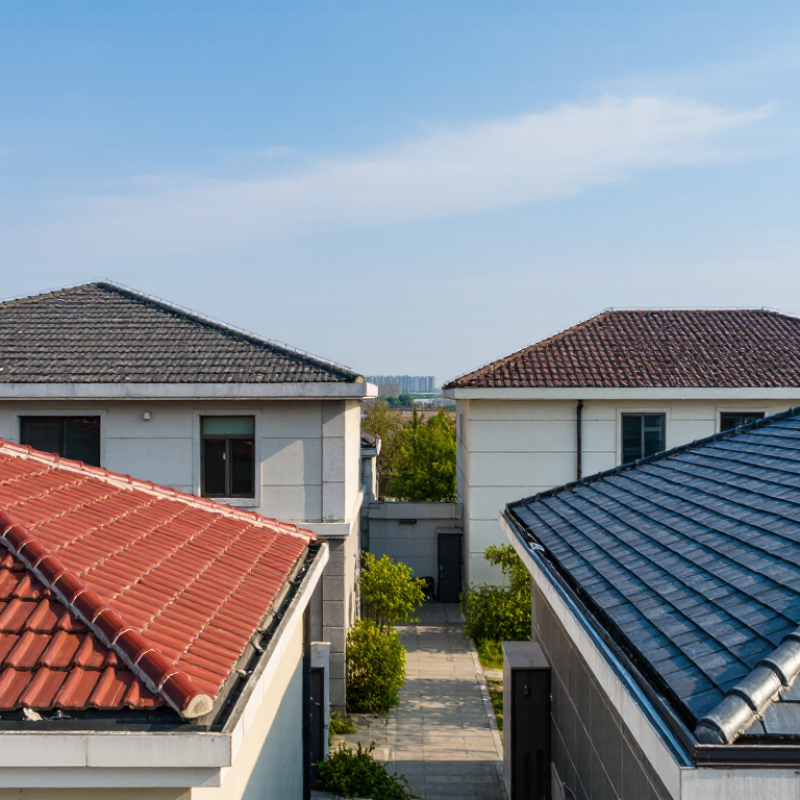
What House Roof Tiles Are and How They Protect a Home
House roof tiles are protective systems, not merely decorative surfaces. Clay and concrete tiles shed rain through overlapping courses, while slate offers dense, layered protection. Their raised profiles also create small drainage channels, helping water move away from vulnerable joints. The National Roofing Contractors Association notes that clay and concrete tile roofs can often serve for 50 years or longer when properly installed. Slate may last even longer, but its weight demands careful structural review. Tiles can resist heat, insects, and fire better than many lightweight coverings. Still, broken tiles can allow water into underlayment and timber. One missed crack matters.
The roof assembly does the real protecting. Flashing around chimneys, valleys, and vents directs water away from seams. Underlayment adds a second barrier beneath the tiles. The Insurance Institute for Business & Home Safety emphasizes sealed roof decks and secure edge details for reducing wind-driven rain damage. Color matters, too. The U.S. Department of Energy reports that cool roofs can remain about 50°F cooler than conventional roofs under strong sunlight. Light-colored tiles may therefore reduce attic heat, although local climate and ventilation can change the result. No tile is perfect.
Tips: Ask for the tile’s tested wind, fire, and impact ratings. Check whether the roof structure can carry its weight. Walk the roof only with trained help; careless footsteps can fracture tiles. Photograph damaged areas after storms, then arrange a qualified inspection. Don’t choose from appearance alone.
| Roof Tile Type | Typical Material | Typical Service Life | Main Protective Functions | Key Advantages | Important Considerations | Common Applications |
|---|---|---|---|---|---|---|
| Clay Tiles | Fired natural clay | About 50–100 years when properly installed and maintained | Creates a water-shedding outer layer; resists sunlight, rot, insects, and non-freezing weather exposure | Long-lasting, colorfast, low-maintenance, and available in curved or flat profiles | Heavy; may crack under severe impact or freeze-thaw conditions; requires a roof structure suitable for the load | Traditional, Mediterranean, Spanish, and low-energy residential designs |
| Concrete Tiles | Cement, sand, water, and mineral pigments or surface coatings | About 40–75 years, depending on climate, installation, and maintenance | Provides a durable rain barrier and good resistance to wind, fire, insects, and ultraviolet exposure | Strong, widely available, versatile in shape and color, and generally less expensive than many premium tile options | Very heavy; can absorb moisture over time; surface color may weather, and freeze-thaw damage is possible in cold climates | Modern, traditional, and high-wind residential roofing systems |
| Slate Tiles | Natural metamorphic stone | About 75–100+ years with suitable installation and maintenance | Forms a highly durable, water-resistant covering and offers excellent resistance to fire, rot, and insects | Extremely long-lasting, distinctive appearance, low water absorption, and strong weather resistance | Heavy, brittle when handled incorrectly, costly to install, and requires experienced roofing professionals | High-end homes, historic buildings, and projects designed for maximum longevity |
| Fiber-Cement Tiles | Cement reinforced with cellulose or other mineral fibers | About 30–50 years, depending on product quality and exposure | Protects against rain, sunlight, and fire; can provide the appearance of slate or clay at a lower structural load | Lower weight than many natural tiles, stable appearance, and a range of shapes and colors | Can be brittle; cutting may create hazardous dust; performance depends on correct flashing and underlayment | Residential roofs where a tile or slate appearance is desired with moderate weight |
| Composite or Synthetic Tiles | Engineered polymers, recycled materials, or blended mineral composites | About 30–50 years, depending on formulation and warranty specifications | Provides a weatherproof surface and can resist impact, moisture, insects, and ultraviolet exposure when designed for those conditions | Lightweight, easier to handle, and available in styles that resemble slate, clay, or wood | Actual performance varies considerably by material; color fading, thermal movement, and local fire requirements should be checked | Retrofit projects and homes requiring reduced roof weight or a specific architectural appearance |
| Metal Tiles | Coated steel, aluminum, copper, or other corrosion-resistant metal | About 40–70 years, depending on metal type, coating, and maintenance | Sheds rain efficiently and can provide strong resistance to wind, fire, snow shedding, and biological growth | Lightweight, durable, recyclable, and suitable for many roof profiles and climates | May transmit rain noise without proper underlayment; coating damage can lead to corrosion, especially in harsh environments | Lightweight residential construction, steep-slope roofs, and regions exposed to high winds |
| Solar Roof Tiles | Photovoltaic cells integrated into glass or tile-like roofing units | Often designed for approximately 20–30 years of energy-generation performance; roof life varies by system | Combines weather protection with on-site electricity generation; underlying waterproofing remains essential | Integrates renewable-energy production into the roof surface and can provide a uniform appearance | Higher initial cost, complex electrical installation, and repairs may require both roofing and solar expertise | New construction or major roof replacement projects with suitable solar exposure |
Related Posts
-
How to Choose Red Roof Tiles in 2026?
-
Top 10 Benefits of Using Red Roof Tiles for Your Home
-
2026 How to Choose the Best Red Roof Tiles for Your Home?
-
China Top 10 Red Roof Tiles Manufacturers for Global Buyers
-

Why Choose Flat Roof Tiles for Global Projects?
-

How to Choose Ceramic Roof Tiles for Global Projects?