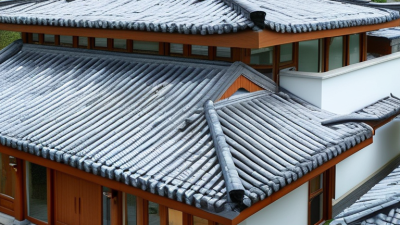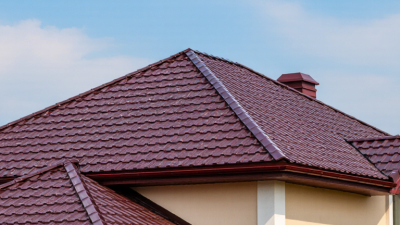
China’s roof tiles industry combines traditional clay craftsmanship with high-volume concrete and ceramic production. This makes supplier comparison more complex than checking price alone.
Grand View Research reports that the global roofing materials market was valued at approximately USD 145.15 billion in 2023. It projects continued growth through 2030, supported by construction, renovation, and climate-resilient building demand. Fortune Business Insights estimates the global roof tiles market at about USD 40.29 billion in 2023. Its forecast also indicates steady expansion through 2032. These figures differ because researchers use different market definitions. That deserves attention.
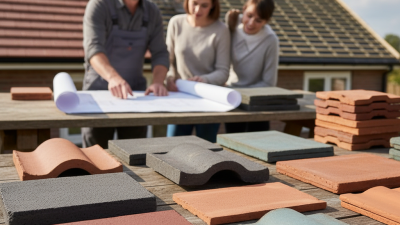
Quality begins inside the factory. Reliable Chinese manufacturers should show controlled firing temperatures, water absorption results, frost-resistance testing, dimensional tolerances, and documented batch inspections. Buyers should also examine pallet strength, edge protection, color consistency, and replacement policies. A roof tile can look excellent in a showroom yet fail during careless transport. Small details matter.
Building-science expert Dr. Joseph Lstiburek offers a useful principle: “A roof is a system, not merely a covering.” That idea applies directly to roof tiles. Tile weight, underlayment, battens, ventilation, drainage, and local wind requirements must work together. Experienced suppliers can provide technical drawings, installation guidance, product samples, and test documentation. Certification alone is not enough.
No supplier ranking is perfect. Factory capability can change, and online claims may be incomplete. Therefore, this guide focuses on verifiable manufacturing experience, technical evidence, export performance, and responsive communication when identifying China’s best roof tiles manufacturers and suppliers.
China’s roof-tile industry covers four practical choices: clay, concrete, metal, and composite tiles. Grand View Research valued the global roofing materials market at about US$129.5 billion in 2023. It also forecasts approximately 4% annual growth through 2030. China’s supply chain is broad, but factory scale does not guarantee consistent quality.
Clay tiles are fired from natural minerals and offer rich colors, low maintenance, and strong weather resistance. Their porous structure still requires water-absorption testing. Concrete tiles provide heavier coverage and stable dimensions. China’s National Bureau of Statistics recorded about 1.87 billion tonnes of cement production in 2023. That large material base supports competitive concrete-tile sourcing, although heavy roofs need stronger rafters and careful transport planning.
Metal tiles use coated steel or aluminum sheets, often with stone-coated or painted surfaces. They are lightweight and install quickly. Wind-uplift resistance, coating thickness, edge treatment, and fastener quality deserve close inspection. Composite tiles can imitate slate, wood, or clay with reduced weight. Yet ultraviolet aging and thermal expansion remain practical concerns. I would request test reports, sample panels, batch records, and installation guidance before placing a large order. A beautiful sample can hide uneven locking edges. That mistake is expensive.
Approximate installed material weight in kilograms per square metre. Actual weights vary by product, profile, and installation.
Clay and concrete tiles are generally heavier than metal and composite roofing. Check product specifications and structural requirements for project-specific figures.
For China roof tile sourcing, compare test reports rather than relying on product descriptions. ASTM C1167 sets performance requirements for clay roof tiles, including water absorption and freeze–thaw durability. Its grade benchmarks commonly use average absorption limits of 6%, 9%, and 13%; confirm the applicable grade and current standard edition with the supplier. Lower absorption can reduce water entering pores, but it does not prove a tile will survive repeated freezing. Ask for the measured result and the freeze–thaw test method. Small cracks matter.
Wind resistance depends on the full roof system: tile shape, fasteners, battens, roof pitch, and edge detailing. ASCE/SEI 7-22 provides site-specific design wind speeds; these are not interchangeable with a tile’s standalone uplift rating. Request test evidence for the proposed installation, including fixing pattern and tested roof configuration. A tile may pass a laboratory test yet perform poorly when installed differently. That detail is easy to overlook.
Tips: Check that reports identify the exact tile model and test laboratory. Compare water absorption, freeze–thaw results, and wind-uplift evidence side by side. If data are missing, ask for them before ordering. I would still inspect samples: paperwork cannot reveal every weak edge or uneven underside.
Roof tiles can look similar on a pallet, yet their test records may follow different rules. In China, GB/T 21149 provides a framework for fired roof tiles, covering product classification, dimensions, appearance, and performance checks. Buyers should verify the edition named in a supplier’s documents. A familiar standard number alone does not prove equivalent performance. Small differences matter.
EN 1304 covers clay roofing tiles and fittings in the European context, linking product characteristics with relevant test methods. ASTM C1167 is a US specification for clay roof tiles, with requirements that vary by grade and intended exposure. The standards overlap, but they are not interchangeable. Not quite.
For a sourcing review, compare declared dimensions, test methods, sampling, and acceptance criteria line by line. Request dated laboratory reports, not only a certificate page. For frost-prone projects, inspect freeze-thaw evidence; in areas exposed to wind-driven rain, review water-resistance results and installation details. Standards cannot replace local design review. Test specimens and production batches may differ. That deserves a second look.
China Best Roof Tiles Manufacturers and Suppliers
How Chinese Manufacturers Form, Fire, Glaze, and Test Roof Tiles
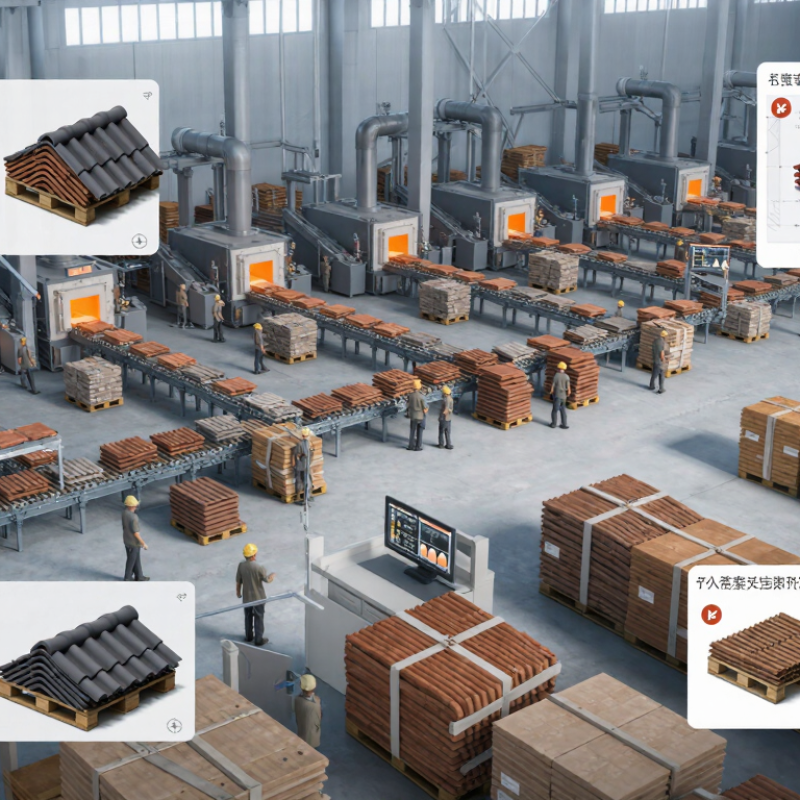
Roof tiles start with clay blended to a consistent particle size and moisture level. Workers or automated lines extrude or press the mixture into molds. The edges and interlocks must fit closely, or water can track beneath the tiles. Drying removes moisture before firing. Rushing this stage can cause cracks or warping. Kilns often fire clay tiles around 1,000–1,200°C, depending on the clay body and kiln design. Glazes add color and a sealed surface, but uneven application may leave thin patches. Small flaws matter.
Quality checks should go beyond appearance. Producers measure dimensions, water absorption, strength, and resistance to freeze-thaw cycles. EN 1304 and ASTM C1167 provide relevant product requirements for clay roofing tiles, though buyers should confirm which specification applies to their project. The 2024 Global Status Report for Buildings and Construction estimated that buildings and construction used 32% of global energy and produced 34% of energy-related CO₂ emissions in 2022. That makes kiln efficiency worth asking about. Request recent test records, not only a certificate. Still, a sample cannot reveal every production variation. Check consistency across batches, especially glaze shade and tile fit.
| Manufacturing Stage | Typical Process | Key Materials or Controls | Quality Checks |
|---|---|---|---|
| Raw Material Selection | Clay-based ceramic tiles are made from prepared clay and other mineral materials. Raw materials are screened, blended, and adjusted to achieve a workable body with suitable drying and firing behavior. | Clay mineral composition, particle size, moisture content, and consistency between batches. | Incoming-material inspection and checks for contaminants, moisture, and batch variation. |
| Body Preparation | Materials are mixed and refined; depending on the plant and forming method, the body may be pugged, extruded as a continuous column, or prepared for pressing. | Uniform mixing, plasticity, air removal, and controlled moisture. | Visual checks and process monitoring for consistency, trapped air, and forming defects. |
| Forming | Tiles are shaped by extrusion and cutting or by pressing in a mould. Profiles, interlocks, and fixing features depend on the tile design. | Dimensions, profile geometry, edge condition, and repeatable mould or die setup. | Dimensional and visual inspection; representative checks of profile and fit. |
| Drying | Freshly formed tiles are dried under controlled conditions before firing. Drying reduces moisture and helps limit cracking or warping during subsequent heating. | Drying time and temperature are adjusted to the body, tile thickness, loading, and kiln system. | Checks for residual moisture, cracks, distortion, and handling damage. |
| Glazing or Surface Finishing | For glazed ceramic tiles, a prepared glaze may be applied to the dried or bisque-fired body, depending on the production route. Some tiles are left unglazed or receive other surface finishes. | Glaze formulation, application uniformity, surface cleanliness, and compatibility with the ceramic body. | Inspection for bare areas, pinholes, runs, uneven coverage, and visible surface defects. |
| Firing | Ceramic roof tiles are fired in a kiln. Many clay roof-tile bodies are fired at roughly 900–1,100°C, but the suitable schedule depends on the body, glaze, kiln, and product design. Glazed products may use a single-fire or multi-fire route. | Peak temperature, heating and cooling rates, kiln atmosphere, and time at temperature. | Kiln records and finished-product checks for cracks, warping, color variation, and incomplete firing. |
| Concrete Tile Alternative | Concrete roof tiles are formed from a cement-based mixture and cured rather than fired. They may receive a surface coating or color treatment. | Mix proportions, compaction, curing conditions, dimensions, and coating application. | Checks commonly include appearance, dimensions, strength-related properties, and water-related performance under the applicable specification. |
| Finished-Product Testing | Samples are inspected and tested against the product specification and the requirements of the destination market. | Test methods and acceptance criteria vary by tile type, intended use, and applicable standard. | Possible checks include dimensions, water absorption or impermeability, breaking strength, frost resistance where relevant, and visual quality. Clay roof-tile specifications include EN 1304 in Europe and ASTM C1167 in the United States. |
| Packaging and Traceability | Accepted tiles are sorted, packed, and prepared for storage or shipment. Packaging is selected to reduce breakage during handling and transport. | Product identification, batch records, protective packing, and secure loading. | Final quantity and packing checks, visible-damage inspection, and retention of production or inspection records. |
A supplier’s certificates are a starting point, not proof of consistent quality. Check that documents cover the tile type you plan to buy, and confirm test dates and issuing bodies. Ask about production capacity in practical terms: monthly output, current lead time, and how the factory handles peak-season orders. A large figure means little if schedules slip. Request samples from the same production line used for bulk orders, then inspect dimensions, finish, and edges under daylight. Small differences matter when tiles meet at the ridge.
Tips: Ask for a written sample approval process. Confirm whether color variation is acceptable and how damaged pieces are handled. One overlooked detail: packaging. Request photos of pallet protection and loading, especially if the route includes several transfers.
Before ordering, clarify export terms, payment milestones, insurance responsibility, and who arranges transport. Put specifications, quantity tolerances, and inspection steps in the purchase agreement. If possible, use an independent pre-shipment inspection. It adds time and cost, and may still miss defects, but it gives both sides a clearer record. Keep communication in writing; verbal promises can become fuzzy across time zones.